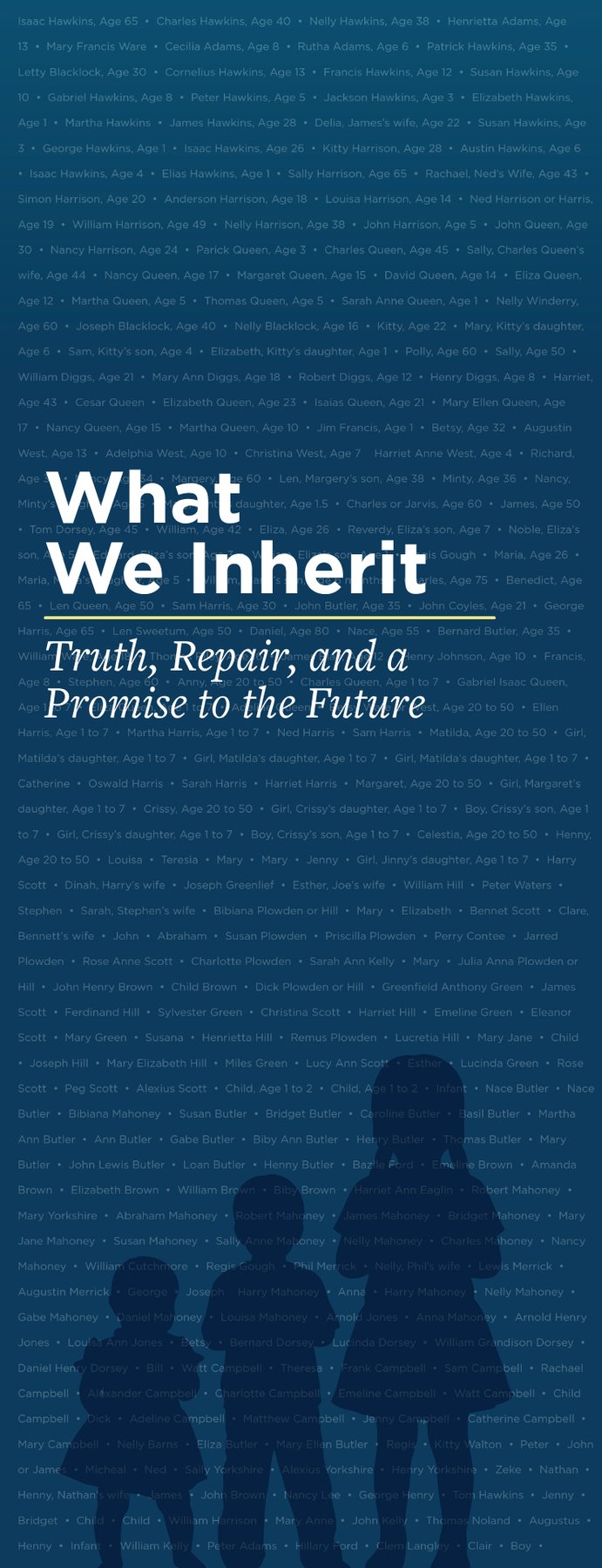
Did you see What We Inherit in person? Tell us what stayed with you.
Share your reflection

What We Inherit / Peter
Peter Queen
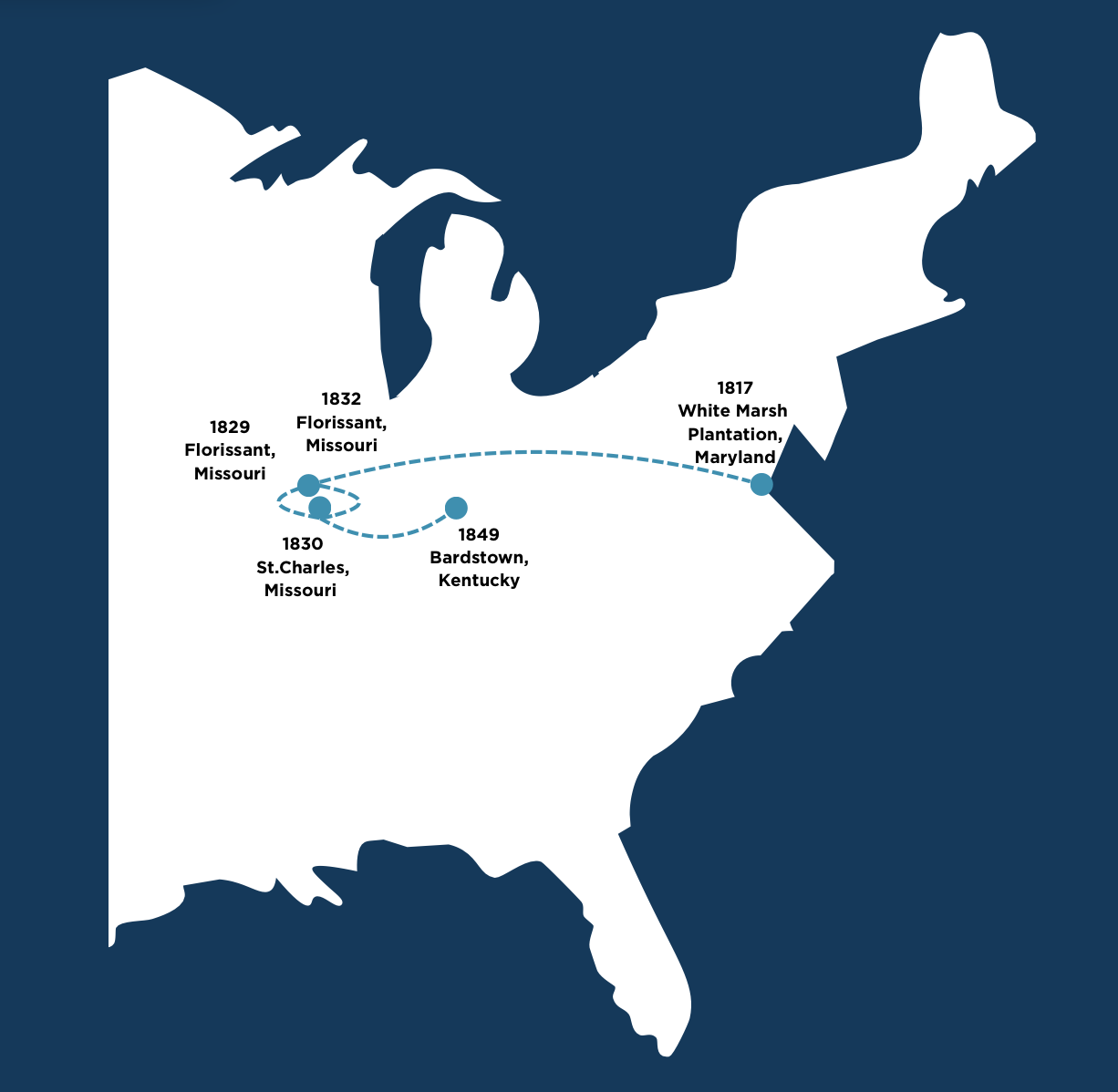
Born on the Jesuits’ White Marsh Plantation in Maryland around 1817. Taken west to a Jesuit mission in Missouri in 1829. Last seen in the records: Louisville, Kentucky, 1849. His story runs alongside the 1838 sale and shows how far Jesuit slaveholding extended.
Born at White Marsh
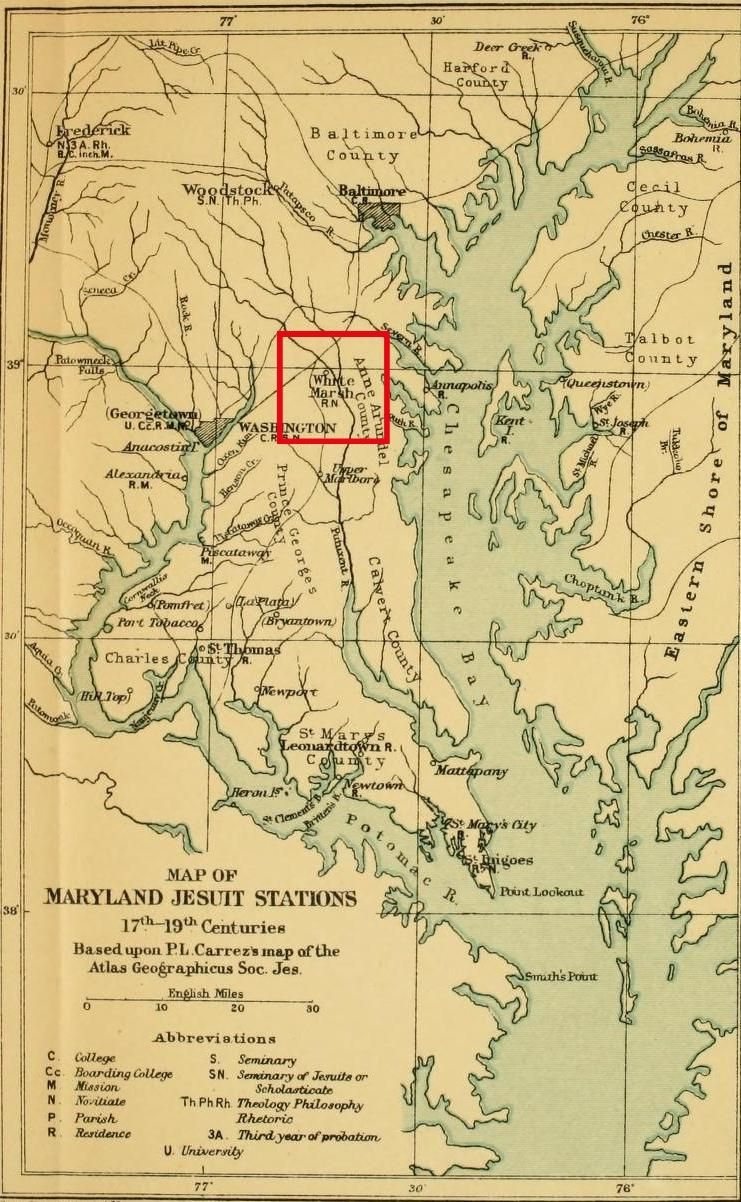
White Marsh, Prince George’s County, Maryland
Peter Queen was born enslaved at White Marsh, the Jesuit plantation in Prince George’s County, Maryland. He worked the same fields where Cornelius Hawkins’ family worked and was known by the same priests.
Like many of the families enslaved, the Queens and the Hawkinses of White Marsh were so interwoven by marriage that the records are nearly impossible to untangle. Peter’s parents are recorded as Jack and Sally Queen, or Proteus and Anny Hawkins — who were themselves sometimes recorded as Queen.
The web of kinship held enslaved people together. Peter carried one of the web’s threads across the country.
Taken West
1829 · Florissant, Missouri — 800 miles from home
In 1829, nine years before the ships sailed for Louisiana, the Jesuits moved teenaged Peter and his family west, to their new mission at Florissant, Missouri.
The arrivals included more than a dozen people, and they were crowded into quarters that already housed three families that had been taken west years earlier.
The superior, Charles Van Quickenborne, promised new housing. But the records show he was a man so harsh that the enslaved community had their own name for him: “Napoleon.” He never built the additional cabins.
Sold and Fought For
1830–1832 · St. Charles, Missouri
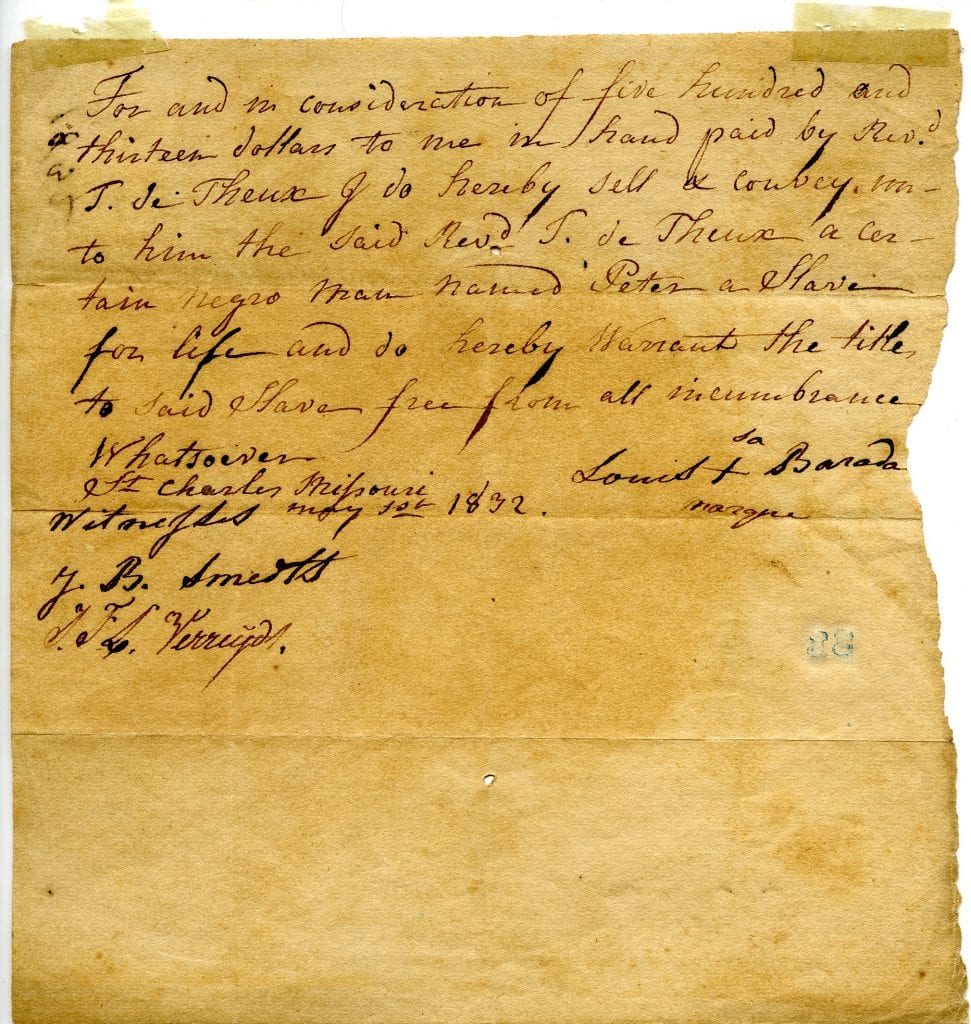
In 1830, Van Quickenborne claimed Peter had threatened to kill him. No other Jesuit heard the alleged threat. Van Quickenborne ordered Peter sold away, to Louis Barada of St. Charles, across the Missouri River.
His parents refused to let it stand. For two years they pressed the mission’s superiors for his return, and in May 1832 the Jesuits bought Peter back — with money raised, in part, by the new superior’s own mother in Belgium.
Peter’s parents “never stopped asking me to repurchase” him, wrote Jesuit superior Theodore DeTheux. The Jesuits bought him back, in the one moment where the record bends toward his family’s will.
On December 30, 1843, Peter married Marian, a woman enslaved by the Graham family, who farmed near the mission. Members of the Queen and Hawkins families stood as witnesses. Peter and Marian had three children: Elizabeth, Gabriel, and Thomas William.
In 1849, months after Thomas William was born, the Jesuits sold Peter away from all of them to their college in Bardstown, Kentucky. They did this despite their own rules against separating families. He had a little money, and he left it with the Jesuits to support his family.
Escaped
November 10–13, 1849 · Bardstown & Louisville, Kentucky
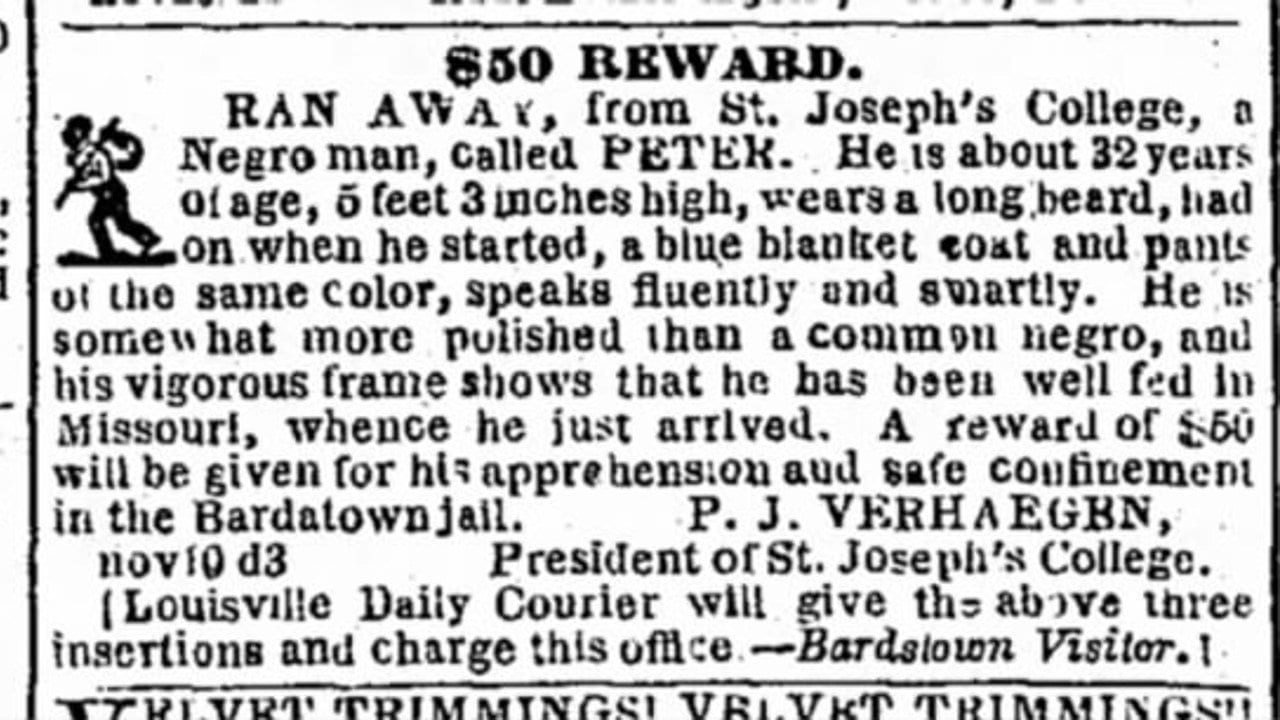
Weeks after being sent to Kentucky, Peter escaped. The college’s Jesuit president placed a newspaper ad offering $50 for the capture of Peter who, it notes, was last seen wearing a blue blanket coat and blue pants, and speaks “fluently and smartly.” The ad ran for three days.
Peter was caught and jailed in Louisville. Days later, the Jesuit consultors voted unanimously to wash their hands of him and sell him, a final time, to a private owner. They used the proceeds to purchase an enslaved woman.
No further records of Peter Queen have been found.
The Jesuits sold Peter out of a Louisville jail. We do not know to whom he was sold or where. We don’t know whether he ever reunited with his wife and children, or when he died, or where he was buried.
The Search Continues
What became of Peter Queen?
The lack of a record found is not proof that no record exists. It is possible that in a jail ledger, a plantation inventory, or even a family Bible, the rest of Peter’s story may be waiting to be found.
Is your family connected to Peter’s children?
Elizabeth, Gabriel, and Thomas William were born in the 1840s near Florissant, Missouri, and enslaved by the Graham family. Their descendants may carry the surname Graham, Queen, or a different name entirely.
If you are a genealogist, archivist, historian of Kentucky, Missouri, or the Deep South — or a family that recognizes these names — reach out.
Share what you know
A Network of Kin
One family’s thread among thousands
The people enslaved by the Jesuits were not strangers to one another — Hawkinses married Queens, Butlers married Mahoneys, Plowdens married Hills. The Queens of White Marsh include Mary “Poppaw” Queen, who was born free and enslaved illegally. Her family fought for their freedom in court.
Mary “Poppaw” Queen
The Queens of White Marsh carried a memory older than the plantation: Mary “Poppaw” Queen, born a free woman in South America, was illegally enslaved in Maryland — and her family never accepted it. Generations of her descendants fought for their freedom in Maryland’s courts.
Her great-granddaughter Mary Ellen Queen was sold in the 1838 sale. Her living Descendants include voices you’ll find on the walls of this exhibit — and her family’s fight is part of the inheritance Peter’s people carried west.
Next Steps

Walk with Cornelius “Neely” Hawkins, 13
The eldest of eight, sold with his whole family aboard the last ship. In 2016, an image of his gravestone in The New York Times uncovered this story for the world.
Walk with Cornelius
Walk with Bibiana “Biby” Mahoney, 45
After her father saved the Jesuits’ lives in the War of 1812, they promised his family would never be sold. They broke that promise, irrevocably.
Walk with Bibiana
Are You a Descendant?
Take this quiz to see whether you could be a descendant of those enslaved by the Jesuits.
Take the QuizApply for Certification
To be eligible for DTRF programs and benefits, you must be a Certified Descendant.
Become Certified
Explore Our Timeline
Explore the centuries of history that lead from enslavement to repair.
Explore Now
Bring the Exhibit to Your Community
What We Inherit travels to museums, universities, libraries, and community spaces nationwide.
Contact Us