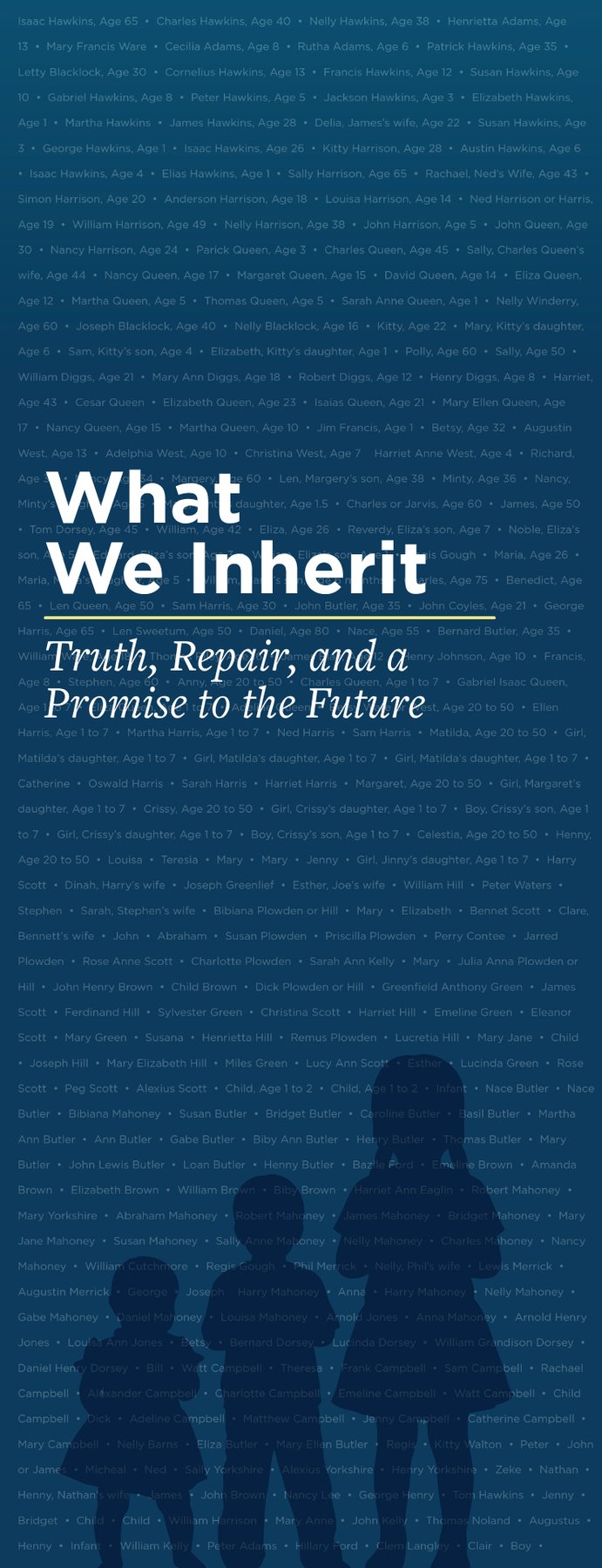
Did you see What We Inherit in person? Tell us what stayed with you.
Share your reflection

What We Inherit / Cornelius
Cornelius “Neely” Hawkins
Born at White Marsh, the Jesuits’ Maryland plantation, around 1825. Sold in 1838 at 13 — with his parents, his grandfather, and his seven brothers and sisters — aboard the last ship. He lived the rest of his life in Louisiana. In 2016, a photograph of his gravestone told the world this history.
Born at White Marsh
White Marsh, Prince George’s County, Maryland
Cornelius Hawkins was born enslaved at White Marsh around 1825, the eldest son of Patrick Hawkins and Letty Blacklock. His family had worked the Jesuits’ Maryland fields for generations — the same plantation where Peter Queen was born. He would have been 4 years old when the Jesuits sent Peter Queen, then 12, away to Missouri.
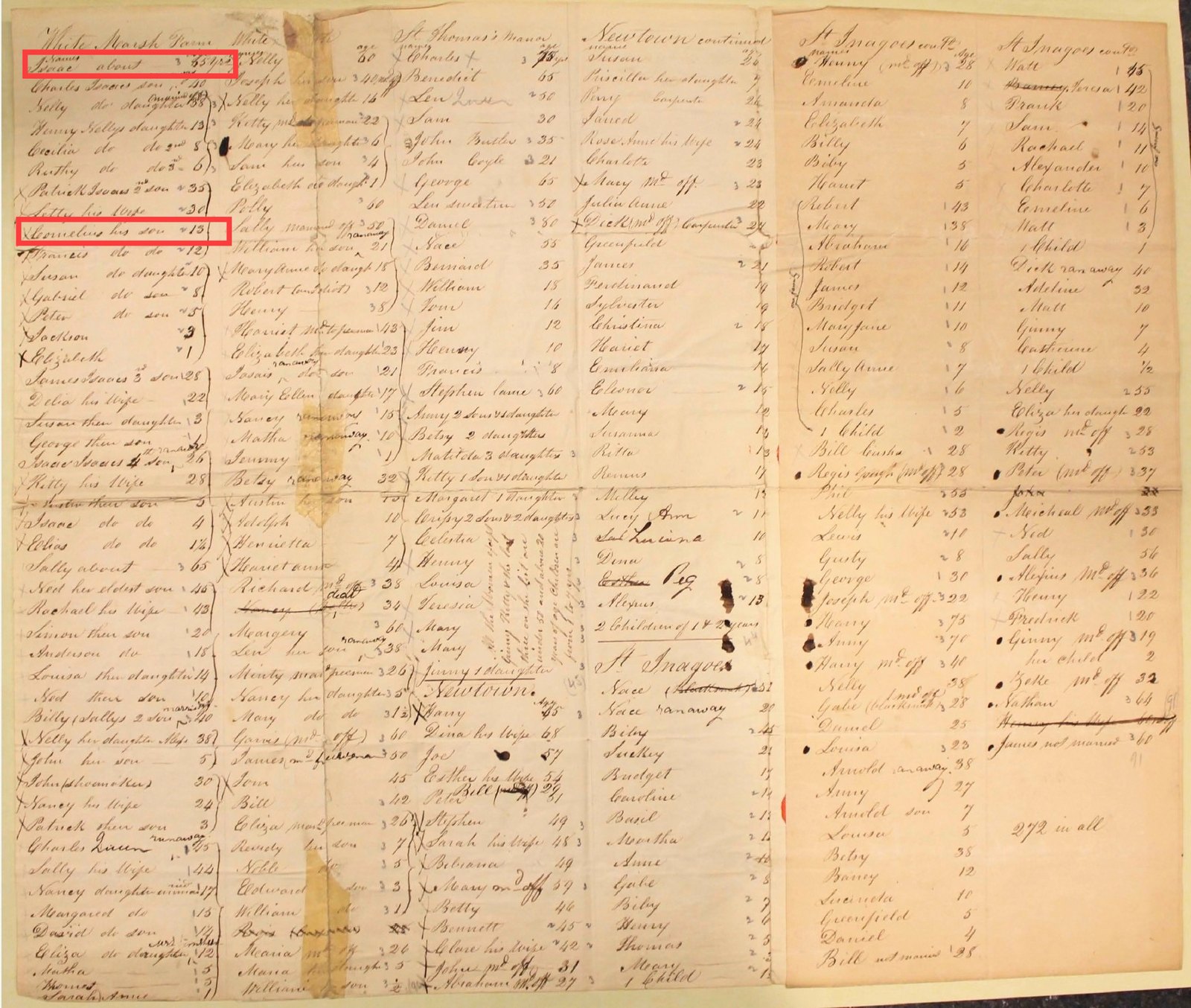
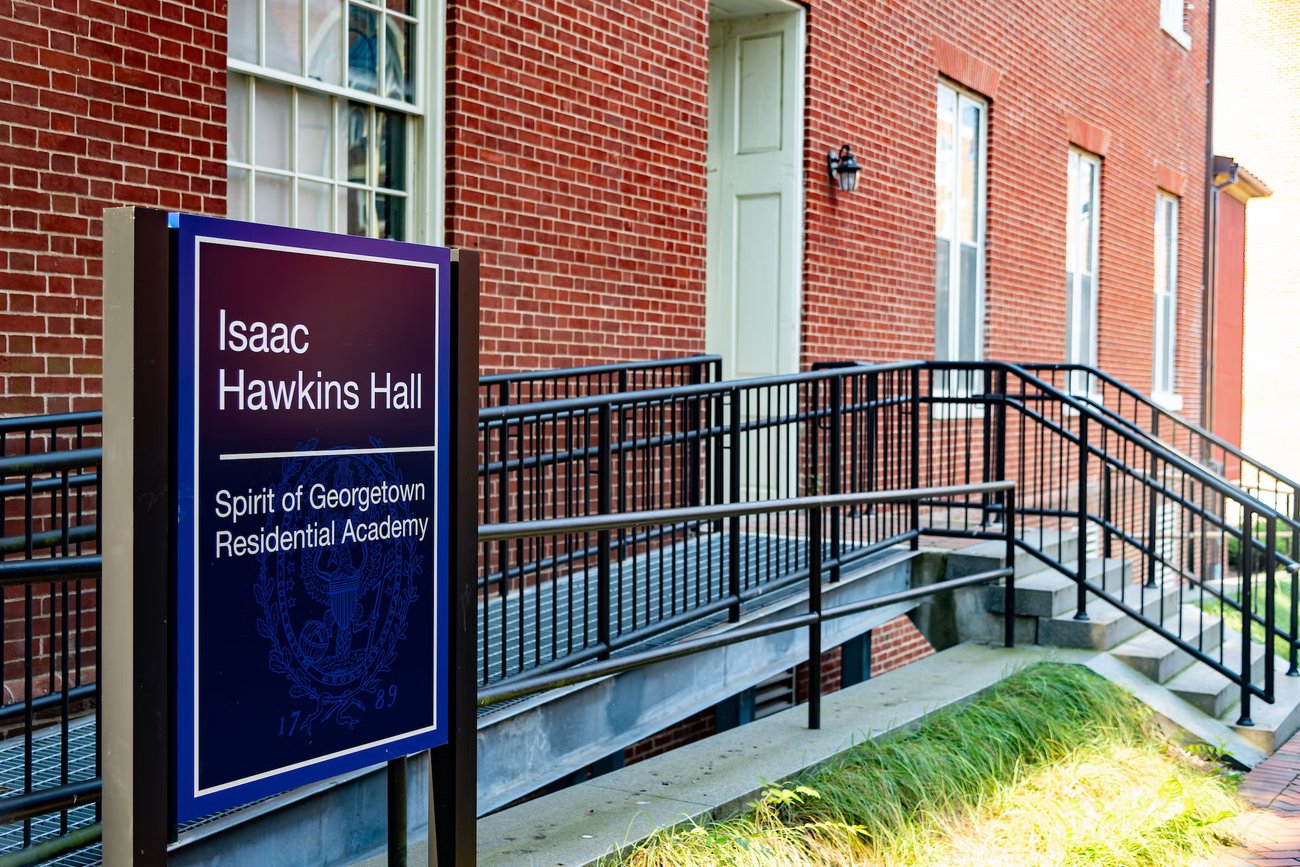
Cornelius’s grandfather was Isaac Hawkins. In 1838, Isaac was about 65 years old, and his name was written first on the list of 314 people the Jesuits agreed to sell. But Isaac never went south. The Jesuits ultimately kept him at White Marsh, and Cornelius never saw him again. Nearly two centuries later, Georgetown University removed the name of Thomas Mulledy — the Jesuit and Georgetown president who sold him — from a campus building and replaced it with Isaac’s name.
The first name on the sale list was Cornelius’s grandfather, but he stayed behind. Cornelius never saw him again.
Shipped Away
November 13 – December 6, 1838 · aboard the Katharine Jackson
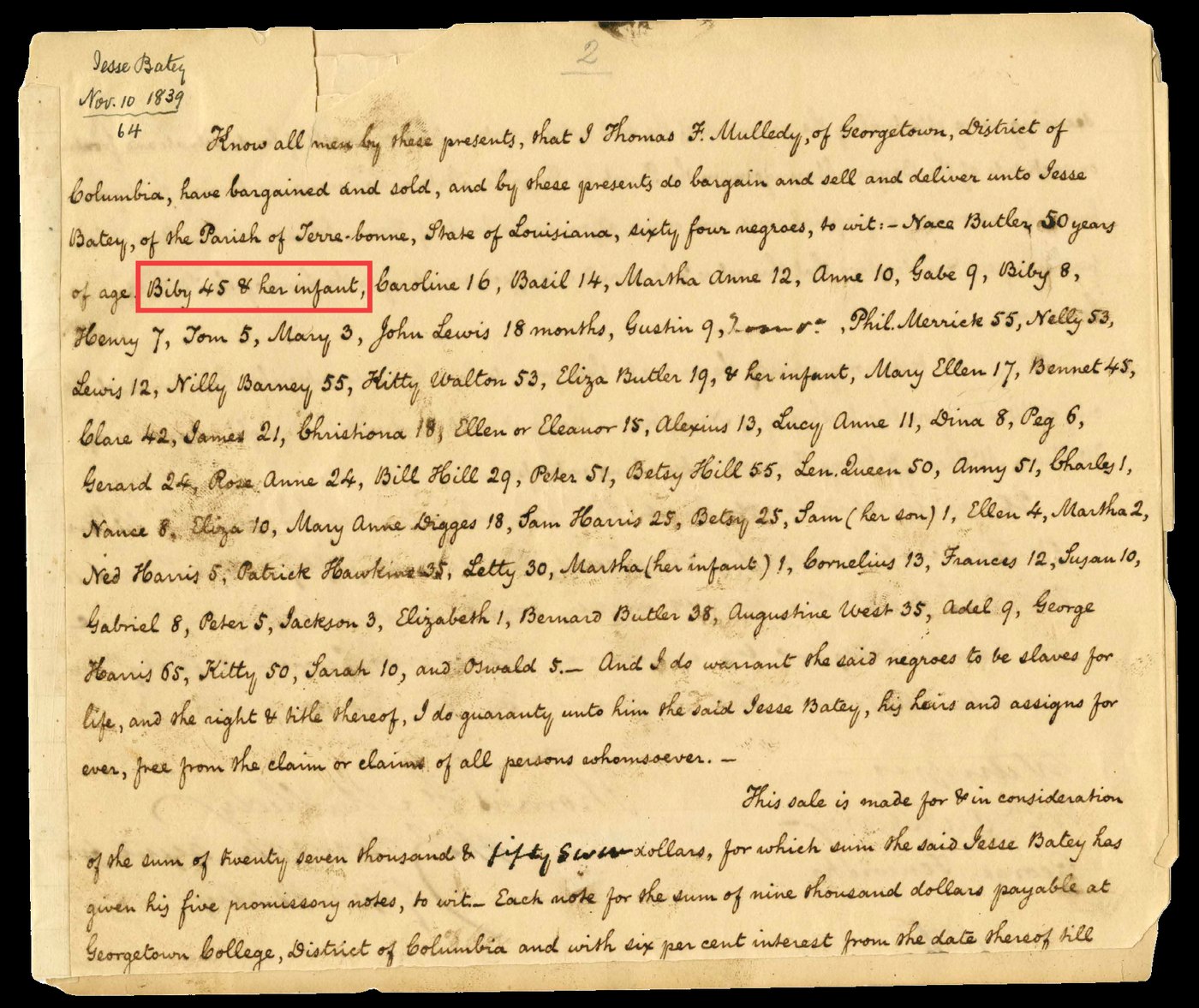
In November 1838, Cornelius boarded the Katharine Jackson at Alexandria with his whole family: his father Patrick, 35; his mother Letty, 30; and eight children — Cornelius at 13, Francis at 12, 10-year-old Susan, 8-year-old Gabriel, 5-year-old Peter, 3-year-old Jackson, 1-year-old Elizabeth, and an infant, Martha, born that year.
The manifest recorded Cornelius’s height as 4’7”.
Unlike many families in the sale, the Hawkinses were not divided at the dock. Nine of them were sold together to Jesse Batey and sent up the river to his plantation at Maringouin, in Iberville Parish. Bibiana Mahoney and her children were aboard the same ship, bound for the same place.
Maringouin
1838–1859 · Iberville Parish, Louisiana
The Hawkinses were put to work in the cane fields of Iberville Parish. Cornelius grew up there, and the community the Maryland families built in Maringouin outlasted slavery itself. Their Descendants live there still.
His brother Francis — Frank — married Biby Ann Butler, the daughter of Bibiana Mahoney, joining two families who had been sent together from Maryland. His youngest brother Jackson, just 3 years old when he was sold, has numerous living Descendants in Louisiana and beyond.
The Name in the Ledgers
1851–1859 · Iberville Parish
After the Jesuits sold Cornelius in 1838, he was repeatedly sold — often with the land. He appears in an 1851 inventory and the 1853 sale documents of Batey’s Maringouin plantation. By 1855, he appears in the Barrow family’s inventory of the same land. In 1859, he was sold to a man named Woolfolk.
The ledgers never learned his life. They did learn his name.
For more than a century, Cornelius Hawkins lay at rest in a Louisiana cemetery under a stone almost no one outside Maringouin had ever seen. Today, it has been seen around the world.
In 2016, The New York Times published an investigation into Georgetown’s 1838 sale. This was the story that uncovered the Jesuits’ slaveholding past for much of the world. One of the most prominently placed and most striking images in the article was a photograph of Cornelius Hawkins’s weather-worn gravestone, leaning onto another, in a Maringouin cemetery.
“A college buddy of mine called me and said, ‘Joe, have you seen the front page of The New York Times? There’s a story about your hometown.’ So I went and got myself a copy, and there it was. I can take three steps from Cornelius Hawkins’ headstone, and I’m standing in front of my oldest brother. All my life I had walked through this cemetery and never knew.”
— Joseph Stewart, Descendant of Isaac Hawkins and Cornelius Hawkins
A Network of Kin
A family undivided
The 314 people sold in 1838 were not strangers to one another — Hawkinses married Queens, Butlers married Mahoneys, Plowdens married Hills. Cornelius’s own family shows how tightly the web was woven: his grandfather Isaac gave his name to a building at Georgetown; his brother married into Bibiana Mahoney’s family; his youngest brother’s great-great-granddaughter leads the Foundation that exists because of this history.
Could you also be a Descendant?
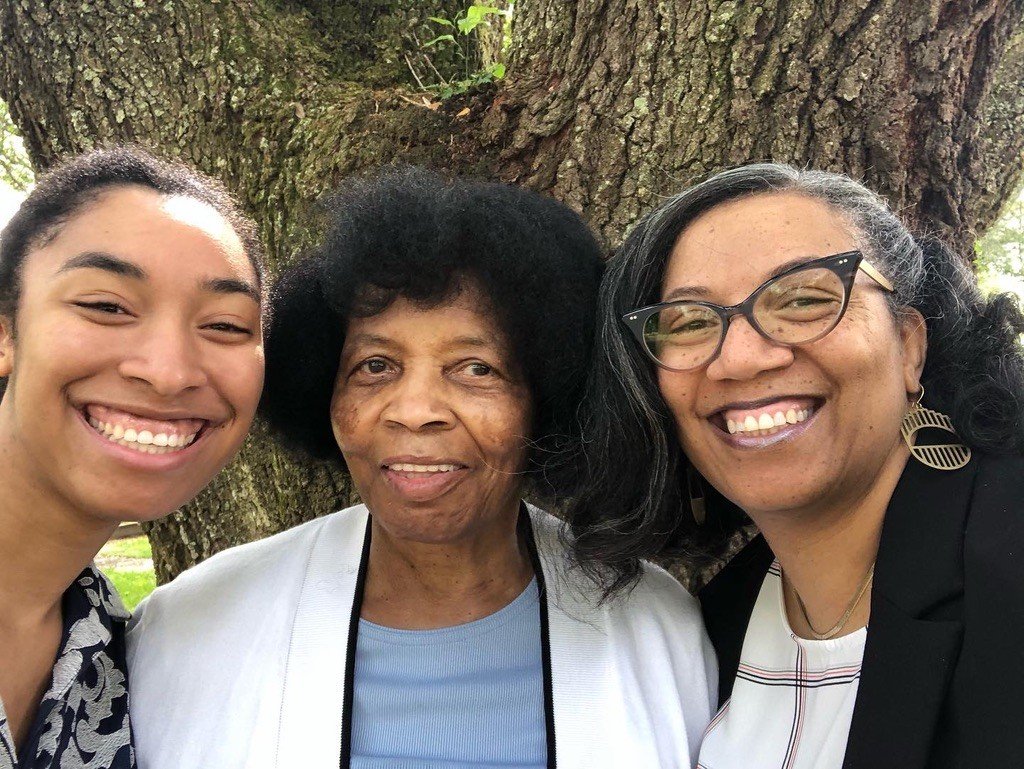
Monique Trusclair Maddox tells the story of the day she learned her family had been enslaved by the Jesuits.
Monique Trusclair Maddox
As a Descendant of Nace Butler, Bibiana Mahoney, and Isaac Hawkins, Monique grew up in the Louisiana town of Maringouin, an epicenter for Descendants of Jesuit slaveholding. Her great-great-grandfather Jackson Hawkins — Cornelius’s youngest brother — was 3 years old aboard the Katharine Jackson. Today she is President and CEO of the Descendants Truth & Reconciliation Foundation.
Next Steps

Walk with Bibiana “Biby” Mahoney, 45
After her father saved the Jesuits’ lives in the War of 1812, they promised his family would never be sold. They broke that promise, irrevocably.
Walk with Bibiana
Walk with Peter Queen, 21
Never on the ships: taken west nine years before the sale. After 1849, the records go quiet. The search for Peter continues.
Walk with Peter
Are You a Descendant?
Take this quiz to see whether you could be a descendant of those enslaved by the Jesuits.
Take the QuizApply for Certification
To be eligible for DTRF programs and benefits, you must be a Certified Descendant.
Become Certified
Explore Our Timeline
Explore the centuries of history that lead from enslavement to repair.
Explore Now
Bring the Exhibit to Your Community
What We Inherit travels to museums, universities, libraries, and community spaces nationwide.
Contact Us